Thursday, May 12, 2016

ON TOP OF THE WORLD (AND BELOW) IN NEW MEXICO


I really don’t know how New Mexico was different from Arizona, but we were hooked!  We headed for Las Cruces and free camping on Bureau of Land Management property.  Happily, our first choice for camping ended with a flat tire.  A bit discouraged, we headed to Aguirre Springs Campground, another BLM site, not free, but only $12 ($6 for us since we have a senior pass).  To get there, we drove up a very curvy road peppered with switchbacks. 

The Pod is up there somewhere

As we climbed higher and higher, a bare rock formation came to dominate the view. It stood out against the rock covered peaks that surrounded it.  I thought it resembled a bas relief of an elephant’s head, Kathleen thought it looked like a whale.


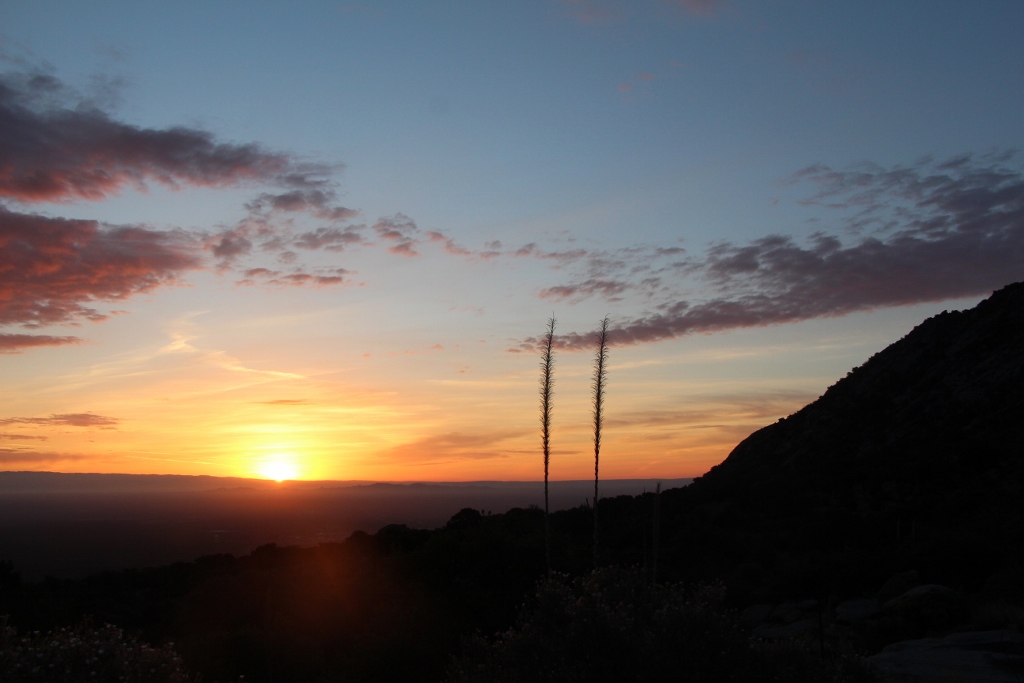
What a lucky turn of events.  Our campsite offered no amenities like water or electricity but it more than made up for that with a view worth a million dollars.  We were perched hundreds of feet above the plain.  Sunsets and sunrises were spectacular.  We could see White Sands 30 miles away.  Only the full moon and the stars provided light at night.  This was perhaps the best campsite ever!


We drove to White Sands National Monument where gypsum has washed down from the San Andre Mountains for eons.


The wind has blown the deposits into snow white dunes that stretch for miles.  The area is prone to high winds that continually reshape the unreal landscape.  When it blows, the gypsum is whipped into plumes hundreds of feet in the air.  The resulting dunes provide great slopes for sledding.


A few miles south of White Sands is the picturesque community of Mesilla.  The plaza there is a classic Mexican/New Mexico plaza.   


With a church on one end and surrounded by historic buildings, the plaza provides a peaceful park for sitting with friends or for strolling.  It is very much like the small town plazas we saw throughout Mexico.  The town is an interesting collection of old buildings rooted in the 19th century.  It is a laid back place, comfortable with yesterday and in no hurry for today.


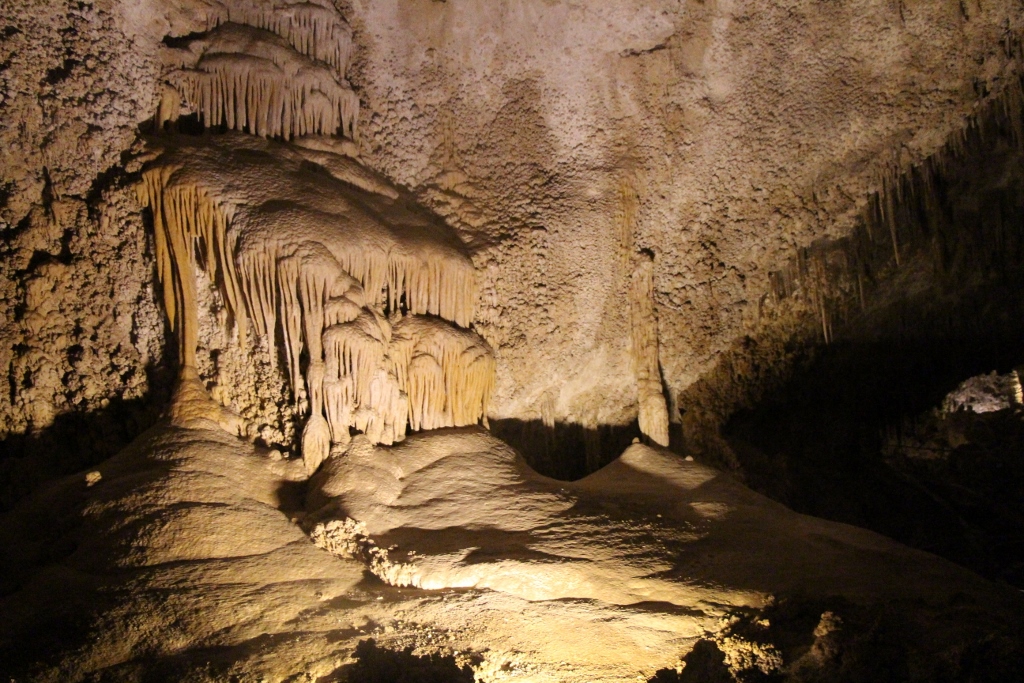
Our last stop in New Mexico was Carlsbad Caverns.  The entrance to the cave is found high in the Guadalupe Mountains.  The Guadalupe Mountains were formed millions of years ago when the area was covered by a sea.  A great reef developed at the edges of this sea.  Tectonic action uplifted the region and the sea disappeared.  The reef remained, towering 3000 feet above plain.  Over time, acidic water draining through the fissures in the rocky structure of the ancient reef dissolved much of the rock.  The fissures grew until the structure could no longer support itself and it caved in.  Then, cave-in after cave-in constantly enlarged the cave.     


We live near Mammoth Cave in Kentucky and have visited there many times.  Water plays a role in the development of all caves.  In the case of Mammoth cave, it is moving water that scoured out the passages.  However, in Carlsbad dripping water caused breakdowns.  This dripping water is also responsible for the fantastic formations that fill the cave. 


The sheer size of Carlsbad is mind-boggling.  Rooms easily stretch over a hundred feet and tower 30,40,50 feet overhead.  The formations give a completely eerie ambiance to the whole thing.  Phantasmagorical is the only word that describes the feeling.  

 I have been in many caves but Carlsbad is perhaps the most beautiful and awesome cave I have ever toured.

Monday, May 2, 2016

WELCOME HOME (ALMOST)!


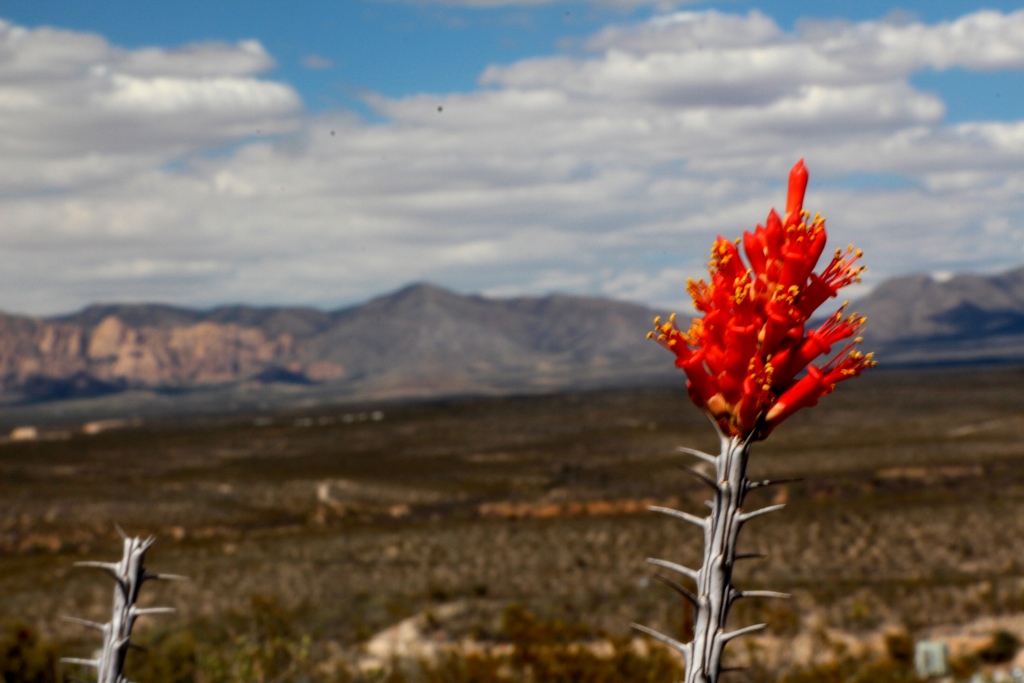
            Welcome home!  Well almost, just another 1800 miles to go.  After more than 6 weeks and 3500 miles in Mexico, we arrived in Nogales, Arizona.  Nature knows no national borders and the terrain did not change dramatically.  We still had broad, empty plains surrounded by bleak peaks.  The Sonoran Desert straddles Mexico and Arizona and it was in full bloom!  We enjoyed plants we had never seen before.  We marveled at the many colors of cactus blossoms. 


We were many miles from the nearest sea shore, but the desert has its own version of “driftwood” and it takes the shape of many strange creatures.


            In Tombstone, we had a glimpse into the lives of Wyatt Earp, his brothers and “Doc” Holliday and learned about their famous gunfight at the OK Coral.  


We had lunch at Big Nose Kate’s Saloon where the waiters pack six-shooters and waitresses coiffed with feathers in their hair wear corsets à la Miss Kitty.  The gravestones on Boot Hill memorialize the various causes of death for those buried there—“killed,” “murdered,” “hanged” etc.

            As we pushed further east, we entered the “Land of Enchantment.”  We were indeed enchanted by New Mexico.  Our first stop was at Rock Hound State Park, a few miles from Deming.  Our campsite was perched several hundred feet above the surrounding plain. 


The forces of erosion have forced the mountain to give up bits and pieces of its surface.  Among those bits and pieces are semi-precious gemstones.  Hikers are free to collect any that they find.  We know nothing about the appearance of gemstones in the rough, but we picked up rocks that looked interesting to us.  The real attraction was the view.  

After weeks of admiring distant mountains from valleys and plains, we could actually sit and watch sunsets and moon-rises from our perch in the sky.


            The exceptional museum in Deming is filled with fabulous collections of everything from dolls and toys to bells to hatpins to memorabilia of every kind. 


Its displays of Native art and life are extensive and beautifully arranged.  The town itself boasts many buildings from the late 19th and early 20th century.


Sunday, April 24, 2016

HASTA LA VISTA MEXICO!


            We headed for the coast.  Our route took us through the mountains and past fields of blue agave.  Tucked up in the rugged hills is the town of Tequila, the birthplace of its namesake liquor.  Our trip up the West Coast began at Playa de los Cocos, a beautiful wide beach on the Pacific Ocean.  We set up camp just a few feet from the surf amid coconut palms at the foot of a steep bluff. 


 We were not alone.  On this beach and the many others where we camped, there were Mexican families on vacation or a weekend outing.  They brought picnic lunches or bought from the many vendors who plied their goods from bicycles, motorcycles and small trucks.  Roving mariachis provided entertainment.


            Even on the coast, the mountains are not far away.  The flat coastal plains spread quickly to the foot of the Western Sierra Madres.  Tucked away in these rugged mountains are small communities.  Some date back to colonial times.  A few miles from our beachside camp at Hautobampito is the small artsy town of Alamos.  Many of its buildings were built during the 17th and 18th centuries.


 Its church is a magnet for art students who come to draw its doors and walls and domed roof.  Families gather in the square across from the church to play and socialize with friends.  The narrow cobblestone streets are lined with colorful shops and exquisite doors set in the brown adobe walls.


 Our final “beachside” camp was at San Carlos, just a couple of short days from the US.  San Carlos is “Mexico Lite.”  You can enjoy Mexican cuisine and music at the many restaurants and bars.  Most of the signs are in English and many people speak a flawless English.  The main streets are wide, smooth and clean.  Even the air seems different.  


            We felt like we were already back in the States.  San Carlos is more a retirement community for Norteamericanos than a Mexican village.  It is surrounded by sea and sand.  On the one side is the Sea of Cortez and on the other the Sonoran desert.  Just a few miles from the sea, the desert plains give way to raw mountains and rugged canyons that defy civilization.

            Our final night in Mexico was spent at Ana and Edgar’s Punta Vista RV Park.  Ana was having some health issues but Edgar was more than willing to spend some time with us.  He has led a colorful life.  In the Sixties, he traveled throughout Mexico with his Rock and Roll band.  He learned to speak English by singing American Rock and Roll.  It was while he was with the band that he met Ana who is from Mississippi.  He became a local hero when he rescued someone during a flash flood.  Sadly, he was injured in a motorcycle accident.  He wasn’t wearing a helmet and his head struck a concrete wall which caused brain damage.  The left side of his body is paralyzed.  He gets around amazingly well in spite of the handicap.  He and Ana have run the park since 1984.
            It was with a certain amount of sadness and an equal amount of relief that we bid goodbye to Mexico.  We spent over 6 weeks and traveled over 3300 miles in some of the most arresting scenery in the world.  We swam in the Pacific Ocean, met a lot of wonderful people and put to rest the myth that Americans harbor about Mexico.  We will miss the colorful and often whimsical ways that people decorate their homes.  We will miss the tropical flowers.


Of course, we aren’t home yet and still have lots to see.