We jumped ship at Brindisi on the East coast of Italy. Al had decided to leave the boat there so we rented a car for the 6 days we had left before our flight back to the States. We decided to head for Catanzaro in the far South of the country and make our way to Rome from there. At the outset, I should say that driving in Italy is a unique experience. I have driven many places all over the world. Nowhere does anything come close. Italians are either the best drivers in the world or they are the worst. I’m sure they all put themselves in the former category, but there is considerable room for doubt. While many buildings could use a fresh coat of paint, the government wastes money on paint for lane dividers on the roads. Traffic signs are open to interpretation, “Yield” means give way if you can’t manage to nose your way into the traffic. “Stop” means . . . well I’m not sure that “Stop” means anything. It seems that every driver thinks he is competing in the Grand Prix. You can be traveling along at 85 miles an hour and someone will pass you like you were standing still---inches from your car.
Our route took us through some interesting towns. First, there was Alberobello, a UNESCO World Heritage Site. Clustered in the central part of town is a collection of circular dwellings topped with conical, stone roofs--trulli.


You almost expect to see Hobbits in the doorways. Outside of town, similar structures are scattered about the countryside.
Our next stop was Matera. Again, the attraction was architecture. For millennia, humans have carved out shelters in the soft stone that makes up the cliff above a small stream. The earliest humans simply dug out hollows in the rock. Later inhabitants elaborated on the caves by building façades to enclose the opening. Looking at the cliff from afar, it simply looks like a collection of small, boxy structures.
Behind each of the boxes is a cave dug out of solid rock. People lived in the caves until the 1950s when they were forcibly removed by the government. Disease, particularly malaria, was rampant in the very unhygienic environment. Then, in the 90s, a rehabilitation was undertaken, and a revival was under way,
The site is now a UNESCO World Heritage Site and many of the caves (Sassi) have been modernized and turned into bed and breakfast rooms and modern dwellings. Naturally, many of them are now shops selling high end merchandise and low end souvenirs.
While we were in Matera, Claudia struck up a conversation with a young man who was a tour guide. He asked where we were headed next. The surprised look on his face was unparalleled when she replied, “Catanzaro.” “Why?” he asked, “There’s nothing there!” He was right, of course, but it’s where my grandfather was born. I’m sure that he would not recognize it today.
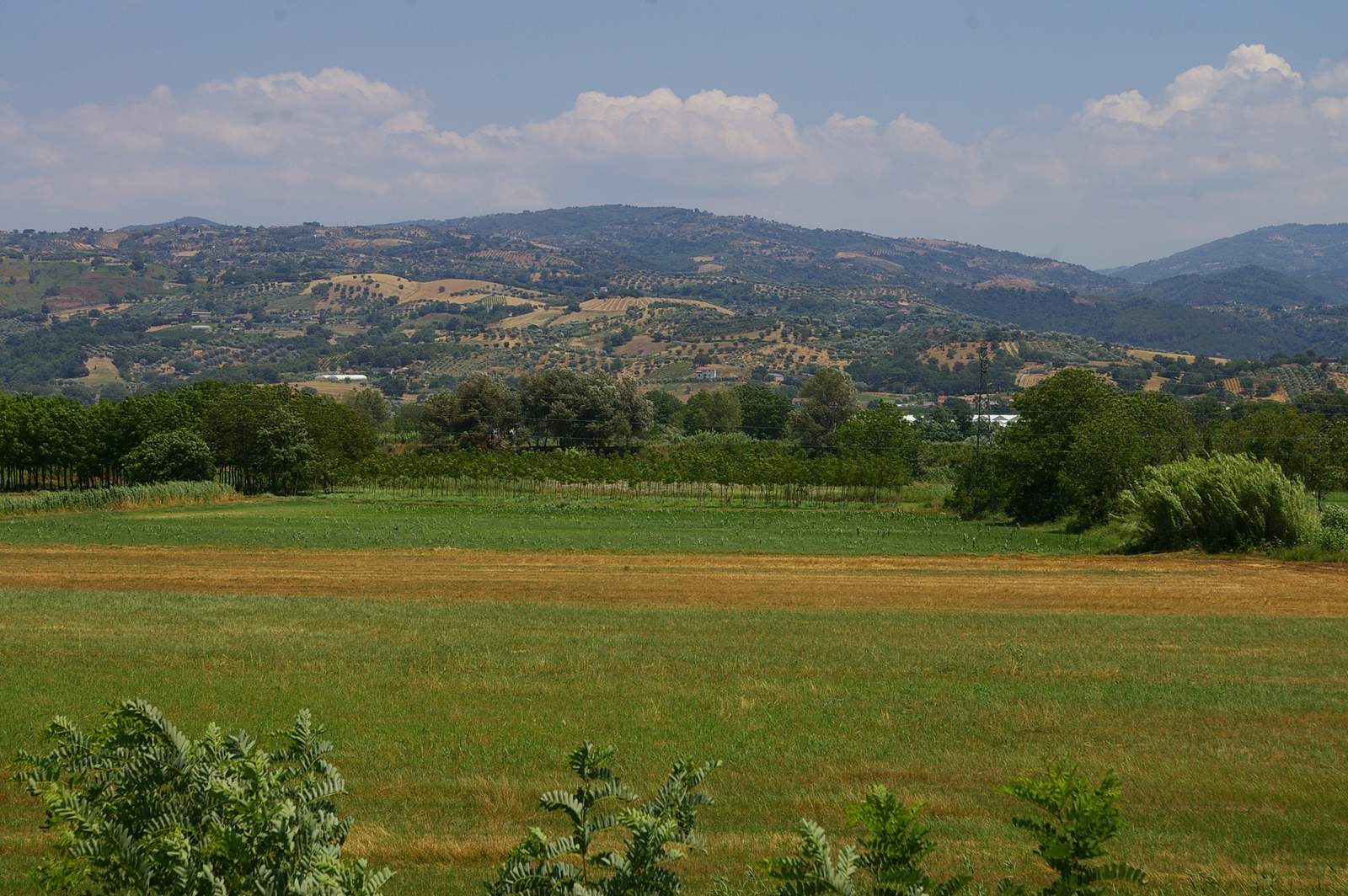
The drive to Catanzaro afforded some great views of the countryside. Most of Italy is agricultural and the south is dominated by fields of wheat, grapes, olive groves, vegetable and fruit farms. It is mountainous terrain and the overwhelming size of the mountains makes you feel small. The land lies in great humps that seem to hold the earth in place by their sheer weight.
The tops of the mountains in many places are festooned with wind generators. We saw many wind farms composed of over a hundred wind generators each. Then, in the broad valleys, we saw acres of solar panels.
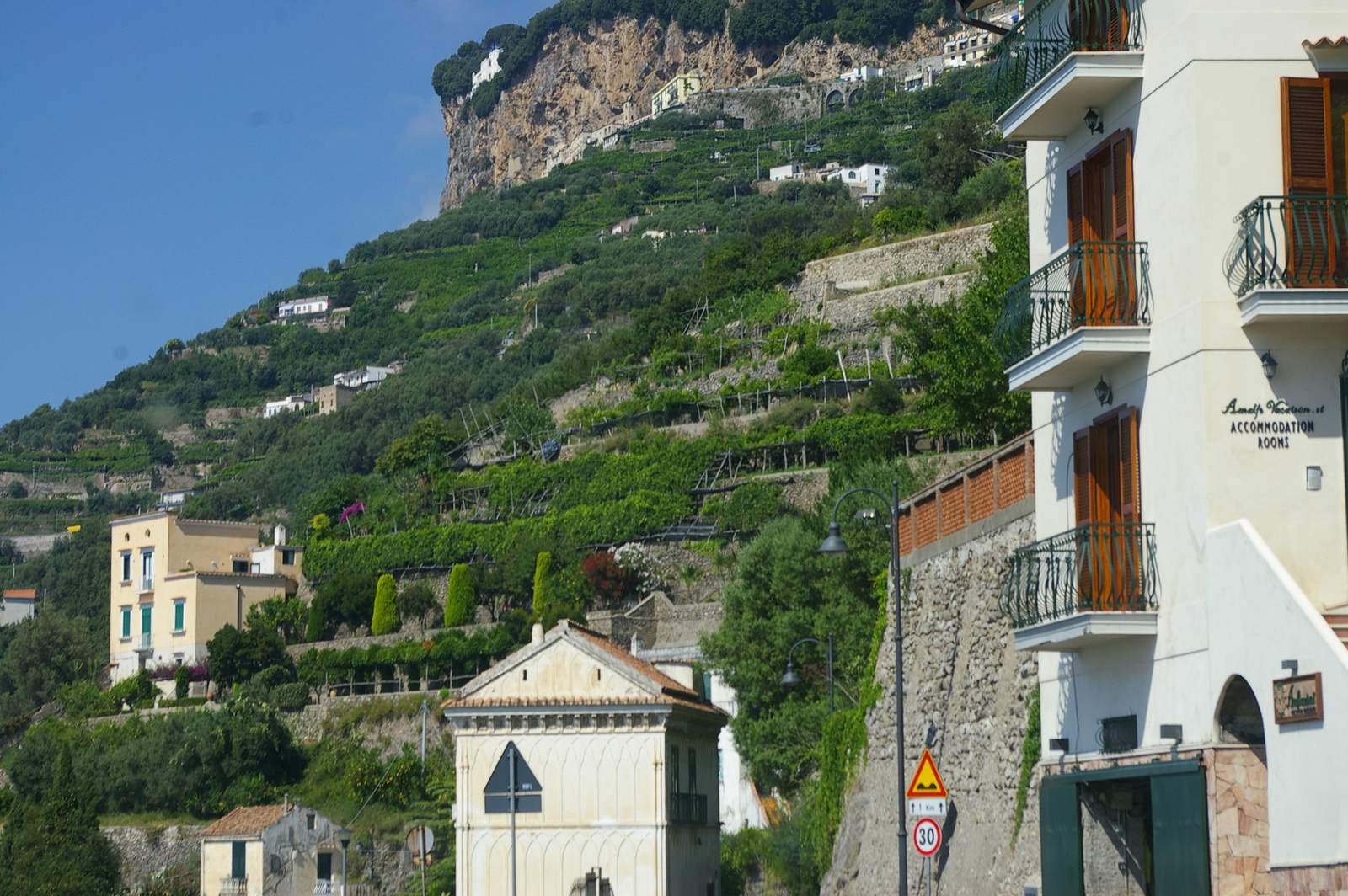
Further north and on the West coast is the renowned Amalfi coast. The narrow road there is composed of switchbacks that take you on an unending climb to the summit of the mountains that border the sea.
So, the time came to bid arrivederci to Italy. Goodbye to markets offering incredible selections of the freshest fruits and vegetables. Goodbye to shops where you can take your empty wine bottles for refills (a liter for $2!). Goodbye to narrow streets shared equally between pedestrians, scooters and cars. Good bye to volcanoes and Roman ruins.






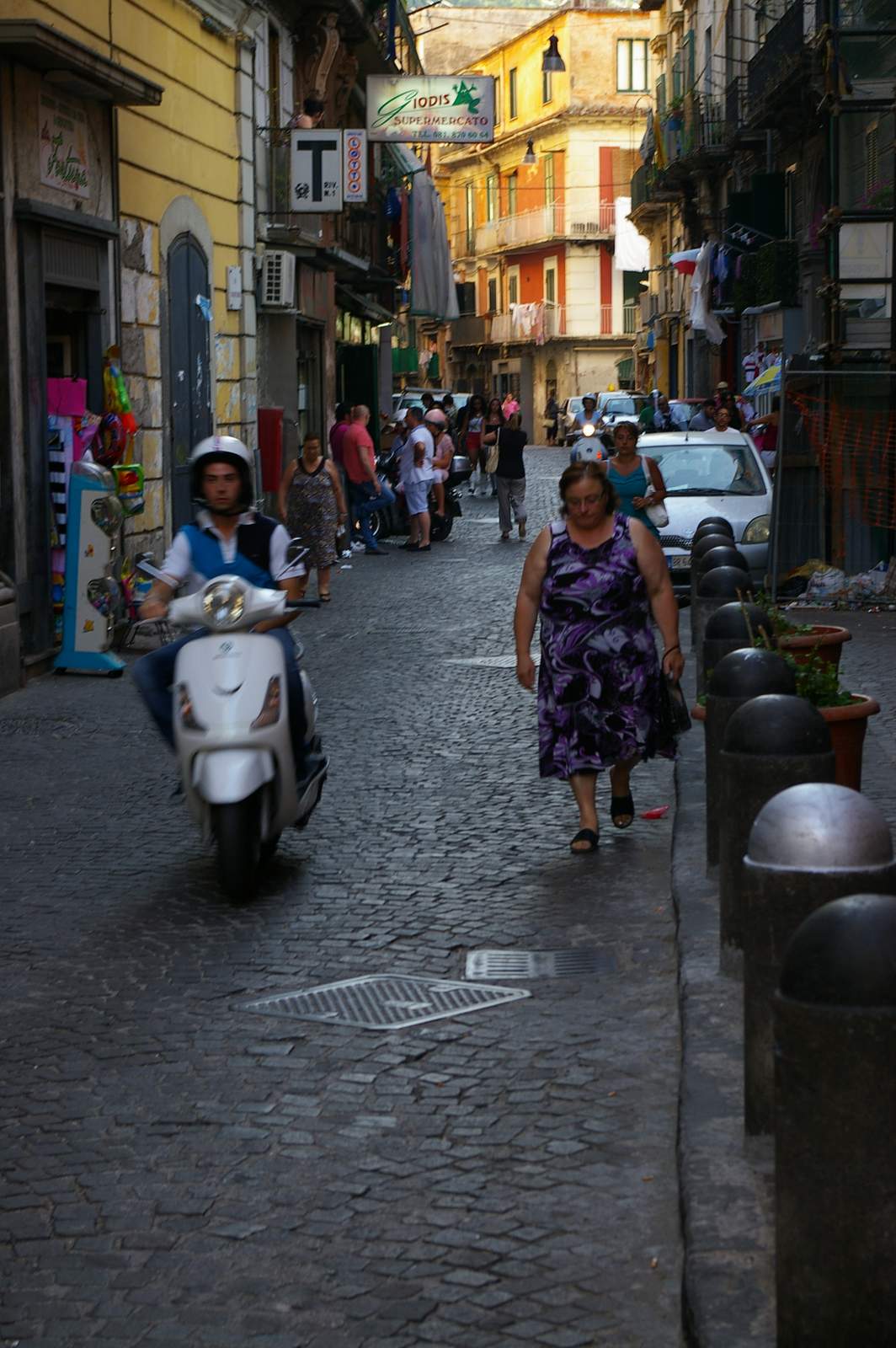


 OK, so not everything needs a new coat of paint!

 Genoa is famous for its pesto and the fame is well deserved. I’m not a fan of pasta salads, but trofie topped with pesto is a fine dish. Then, there are the Vespas. Genoa is where the ubiquitous motor scooter was born and the streets are buzzing with them.


 We took the night train from Genoa to Naples. When we boarded the train, our second class compartment was inhabited by 3 other people. A sixth person joined us later. The compartment has 2 rows of 3 seats each that face each other. It is possible to pull the seats down so you can sort of stretch out from one row of seats to the other. This means that the 6 passengers are arranged side by side, head to toe. When the sixth passenger joined us in our compartment, she virtually took over, stretching out between Claudia and another passenger. Unfortunately, her idea of sharing fell close to “What’s mine is mine and thank you for your generosity.” She sprawled out on her own real estate, fell asleep and took over half of Claudia’s. At least she got off the train in Rome, as did two other passengers, making things more comfortable. Even so, it was a long night.
The Naples train station is a very modern affair with shops restaurants and cafés. There is even a McDonald’s claiming free wi-fi. However, in order to use it, you have to have an account with an ISP. Internet access is very, very spotty everywhere we’ve been in Italy.
Miraculously we were able to find our friend Al and his boat. He was berthed in a small marina in a cute fishing village about an hour by train from Naples.
 We bought a couple of kilos of mussels for supper. The idea was to make moules marinières (mussels steamed in white wine and herbs, one of my favorite dishes). The mussels were harvested a few hundred feet from where Sparrow, Al’s boat, was docked. The mussels were so good, simply cracked open and seasoned with a squeeze of lemon, we ate most of them before they even got into the pot.
The next morning, we were underway on what turned out to be a virtual non-stop delivery of the boat. We did stop at a couple of places overnight to rest up, but most of the trip from Castellamare (south of Naples on the West coast) to Brindisi on the East coast was spent underway. We sailed past the steep Amalfi coast and little villages that spilled down the side of mountains into the sea.
 It would appear that all of Italy is built for mountain climbers.


